
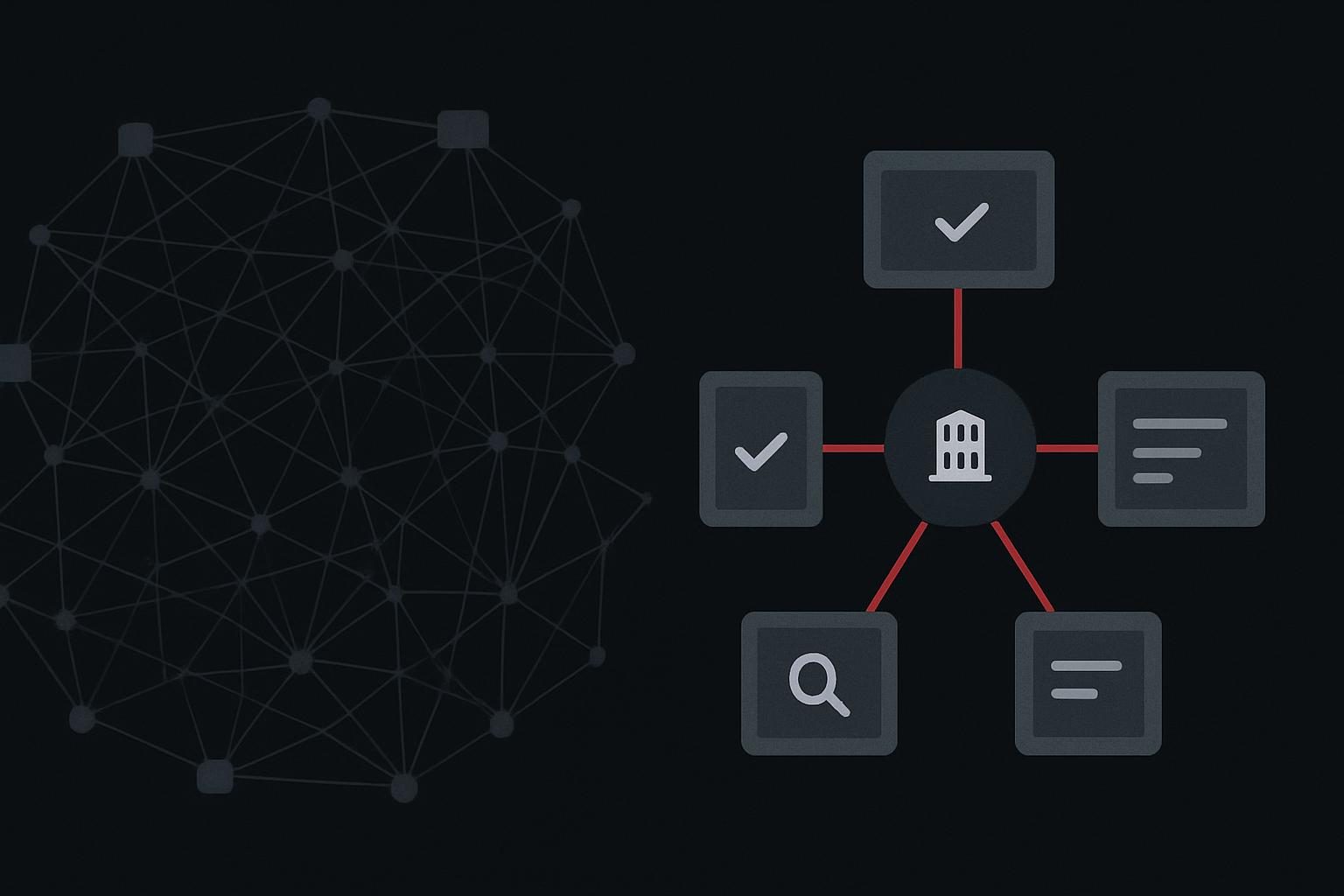
Two companies can look very different in a backlink tool. One has thousands of links, a higher domain metric and a long referring-domain list. The other has fewer links, but several independent industry sources describe its exact service, market and specialist capability in plain language.
For conventional SEO, the first business may still have a meaningful advantage. For AI visibility, the second can be easier to understand and safer to describe. That distinction matters for teams in Dubai, the UAE and elsewhere that are trying to turn link-building activity into better visibility across ChatGPT, Gemini, Perplexity, Copilot and AI-powered search.
A backlink is a route, not a verdict
Links can help discovery. They can expose pages to crawlers, connect a business with relevant parts of the web and contribute to the broader authority signals that support organic search performance. A useful link from a respected trade publication can be commercially valuable for several reasons at once.
But a backlink metric is an abstraction of a link graph. It does not tell an AI system whether the linking page accurately explains what your business does, whether its claim is current, or whether it supports the specific recommendation a user has asked for.
Backlinks can support AI visibility by improving discovery and broader authority context, but link count, DR, DA and referring domains do not directly predict AI citations or recommendations. For a system to confidently associate a business with a service, location or specialist capability, it needs relevant and specific information that corroborates the claim. A link without useful factual context is weak evidence of entity relevance.
The backlink report that looks good but solves little
Consider a specialist B2B consultancy that wants to appear for prompts about a narrow compliance service. Its SEO agency earns dozens of links through generic business round-ups, event sponsorship pages and syndicated announcements. The referring-domain chart improves.
Meanwhile, the firm’s most credible industry profile describes it as a general consultancy. A trade association listing names only its older services. Its website’s Organisation structured data identifies the company but has no clear relationship between the business and the specialist offer.
An AI system assessing a recommendation-style prompt may encounter plenty of evidence that the company exists. It may still have limited grounds to associate that company with the specialist service. The missing work is not another generic link. It is a clearer factual record.
What link metrics cannot see
Domain Rating, Domain Authority and similar scores can be useful comparative tools. They help teams assess the relative strength or popularity of domains within a link analysis workflow. They are not measures of factual accuracy, service relevance or citation-worthiness.
A page can have a strong metric and still provide almost no usable corroboration. Equally, a modest industry publication, professional body page or detailed expert contribution may carry a lower tool score while clearly stating the service, audience, geography and credentials that matter to a buyer question.
| Signal | What it can indicate | What it cannot establish |
|---|---|---|
| Backlink count | How widely a URL has been linked | Whether linked pages support a specific business claim |
| Referring domains | Range of websites linking to a domain | Whether those sites independently describe the same offer |
| DR or DA | Relative link-profile strength in a third-party tool | Whether an AI system will cite or recommend the business |
| Anchor text | How other pages label a linked destination | Whether the surrounding page gives accurate, sufficient context |
| Specific third-party description | Independent support for an entity and claim | Guaranteed platform behaviour or recommendation outcomes |
Corroboration has a different job from the link graph
Corroboration is not simply a mention on a high-metric domain. It is independent information that agrees with a claim your business needs to own. The strongest examples are usually specific enough that a reader could repeat the claim without guessing.
For a UAE property advisory firm, that could mean a credible source accurately identifying its transaction type, target client, emirate coverage and named expertise. For a software consultancy, it may mean an independent source explaining the implementation category, platform specialism and market served.
The useful question is not only, does this page link to us? Ask, what does it say about us, and would that wording support the association we want a system to make?
Specificity beats vague authority for narrow claims
A high-authority news article that calls a business an innovative company may be useful reputation coverage. It is poor corroboration for a precise claim such as specialist SAP migration partner for regulated manufacturers.
By contrast, a technically detailed contribution, partner ecosystem page or sector publication that uses the correct service name can do more explanatory work, even if it produces one link rather than fifty.
This is why PR for AI visibility and third-party authority should be treated as a factual positioning exercise, not a race for publication logos. Coverage is more useful when the editorial context carries a defensible claim rather than a generic compliment.
Keep link-building when it serves a real discovery job
None of this means abandoning link-building. Links remain useful where they support organic search, referral traffic, crawl discovery, relevant audience reach or a credible authority profile. The error is making a metric rise the only definition of success.
Keep investing when the activity produces one or more of these outcomes:
- Relevant pages link to answer-ready service or research content.
- The surrounding copy accurately names the service, market or expertise being promoted.
- The publication reaches buyers, partners or journalists who have a reason to use the information.
- The link supports an editorial asset that can earn further citations or references naturally.
Be more cautious when a campaign mainly produces sitewide links, irrelevant resource-page placements, generic sponsored posts or mentions that omit the very service you are trying to establish.
Three budget decisions for GEO work
Before moving more budget into digital PR or outreach, separate the issue into one of three decisions.
1. Keep building links
Continue when your site has a weak discovery footprint and the planned placements are relevant, editorial and likely to send both link equity and useful context. A strong service page is still required. A link cannot clarify an offer that the destination page leaves vague.
2. Improve the descriptions around existing links
If authoritative pages already mention your company but use incomplete language, the higher-value task may be correcting the public description where editorially possible. This is not about forcing wording onto publishers. It is about ensuring your own contributed material, partner information and approved company details are accurate before they spread.
A useful audit detail is to compare the service names in page copy, title tags, structured data and external mentions. If your site calls the offer AI visibility monitoring, a partner calls it SEO reporting and an industry profile calls it digital marketing, no backlink metric will resolve the ambiguity.
3. Stop using link metrics as the AI visibility KPI
Stop when the report is rising but prompt tracking shows no clearer business description, no stronger unbranded discovery and no improvement in the accuracy of relevant mentions. Metrics may still belong in an SEO report, but they should not be presented as evidence that AI platforms understand the entity better.
Use a separate record for claim-level corroboration: the claim, the source, the wording, its independence, its relevance and whether it remains current. The practical method for choosing which sources deserve attention is more nuanced than a domain score alone, as explained in this guide to prioritising third-party sources for AI visibility.
Measure the evidence beside the metric
A sensible monthly review can keep link metrics, but it should place them beside more revealing checks. Sample new referring domains and record whether their pages contain a correct description of the business. Review whether links point to generic homepages or pages that explain a specific offer. Then test a stable set of realistic branded and unbranded prompts over time.
For citation-focused work, assess whether the destination content itself gives an independent platform something clear to extract, verify and reuse. Our guidance on making pages more citation-worthy for AI search covers that first-party side of the equation.
The useful standard is simple: count links if they help manage SEO work, but judge AI relevance by what credible sources actually say and support. A cleaner link graph is useful. A clearer public record is usually more useful.
Questions about backlinks and AI visibility
Do nofollow links matter for AI visibility?
A nofollow link may still expose a business to readers, crawlers and relevant editorial context, depending on how the linking page is accessed and used. It should not be dismissed automatically. The more important question is whether the page independently and accurately describes the entity or claim. A nofollow link with precise context can be more useful for understanding than a followed link from an irrelevant page.
Does domain authority predict AI citations?
No. Domain authority is a third-party metric, not a citation forecast. A stronger domain may be more discoverable or influential within search ecosystems, but the metric cannot determine whether a platform will retrieve, trust, cite or recommend a particular page. Citation behaviour depends on the query, available sources, factual relevance, platform design and changing retrieval conditions.
Should link-building budgets change for GEO?
They may need a different success measure rather than an automatic cut. Keep funding relevant editorial coverage and links that support discovery, search visibility and buyer reach. Reduce spend on placements chosen mainly for a tool metric when they add no clear factual context. Reserve budget for producing evidence-rich content and correcting important descriptions where a specific entity association is missing.