
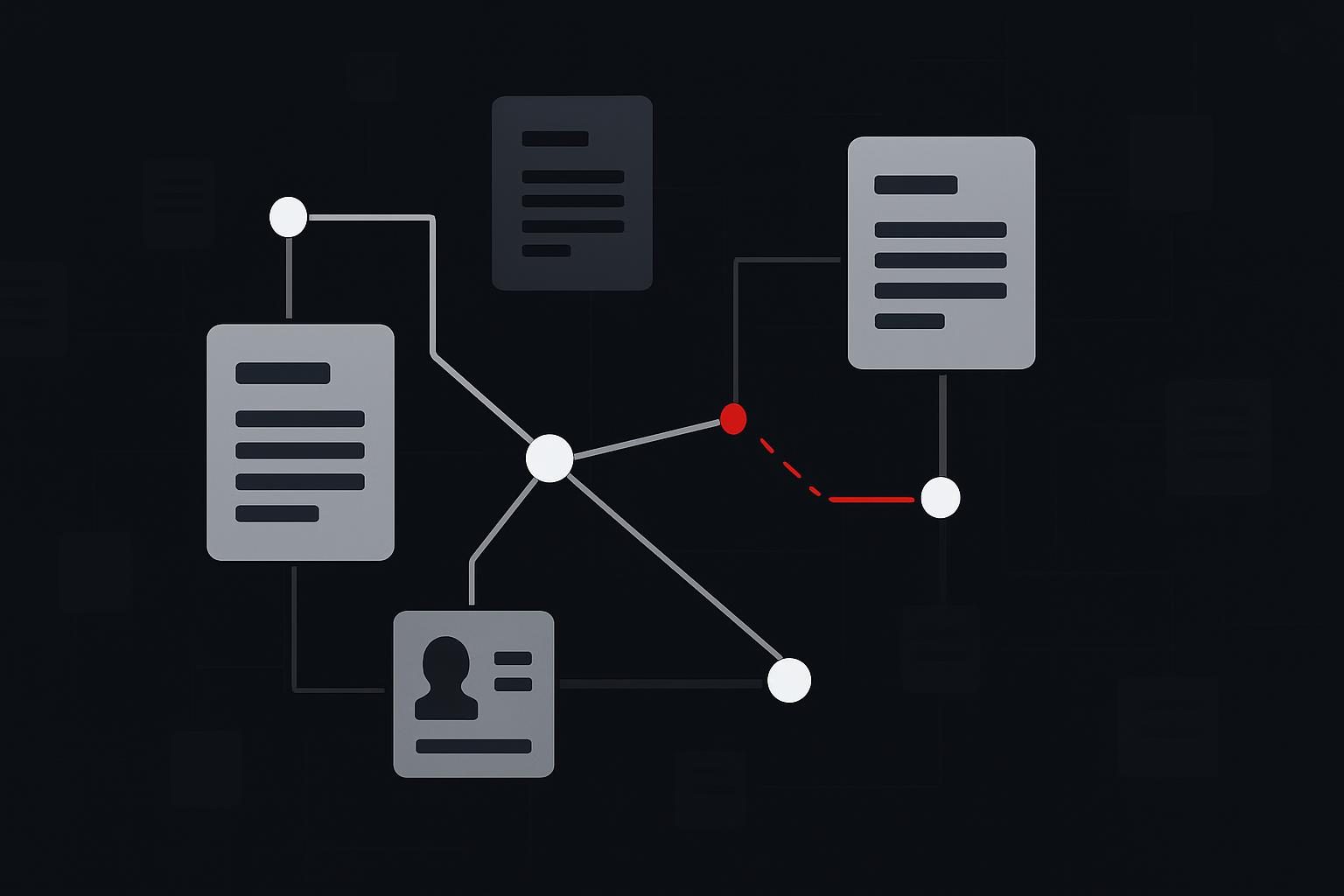
A specialist firm can have fifty mentions online and still leave a buyer, search engine or AI assistant unsure what it actually does. One directory calls it a consultancy. A trade profile calls it a software provider. A local listing mentions a service it stopped offering years ago. Its strongest media mention names the founder but not the market.
For businesses in Dubai, the UAE and other competitive service markets, this is a common authority problem. The issue is rarely a total absence of references. It is that no two authoritative sources describe the core service, audience and proof in a sufficiently consistent way.
The broader case for external authority is covered in our guide to PR and third-party authority for AI visibility. The practical question is narrower: which sources deserve attention first, and which mentions are merely clutter?
Corroboration is independent, specific agreement
Third-party sources for AI visibility are most useful when they independently support a precise fact about the same business. That might be its specialist service, market, location, named expertise, client type, accreditation or published evidence. A source that repeats a thin boilerplate description adds less than one credible profile that explains the business properly.
AI systems and AI-powered search experiences use their own retrieval, ranking and answer-generation methods. No source can compel a citation or recommendation. But consistent, credible information gives platforms less reason to confuse a business with a similarly named company, an outdated offer or a vague category.
Choose source types by the buyer question
Start with the question a prospective customer is trying to answer. A buyer looking for a niche B2B provider needs different corroboration from someone checking whether a local business is legitimate, established or active.
| Source type | Best use | What makes it valuable | Priority |
|---|---|---|---|
| Industry publication or independent editorial coverage | Supporting specialist expertise, market position or evidence | Named service, clear market context and genuine editorial distance | High |
| Professional platform profile | Confirming company identity, leadership and core offer | Complete, current description linked to the correct domain | High |
| Trade association, certification or partner profile | Verifying qualifications, memberships or recognised capability | Specific relationship and current status | High when relevant |
| Local business profile or reputable map listing | Confirming location, contact details and service category | Consistent name, address, phone number and category | Medium to high |
| General directory or syndication listing | Basic discoverability and entity matching | Accurate core details on a maintained platform | Low to medium |
A directory is not worthless because it is a directory. It is simply rarely the best place to establish a nuanced proposition. Treat it as supporting infrastructure, not the centre of an authority programme.
Score a source before pursuing it
Use six questions before accepting a placement, updating a profile or paying for distribution.
- Relevance: does the source serve the same industry, geography or buyer group?
- Independence: is the description editorially controlled by the source, or is it copied from a submission form?
- Factual specificity: can it name the actual service, market and supporting evidence rather than calling every firm a leading provider?
- Durability: is the page likely to remain live, indexed and maintained?
- Entity clarity: does it identify the correct legal or trading name, website, location and people?
- Buyer proximity: would someone reasonably encounter this source while assessing the business?
One independent article that identifies a firm as a provider of a particular service to a defined market, and includes a meaningful example of its work, can outperform a long list of generic profiles. It gives a machine and a buyer something concrete to compare against the first-party site.
Repair contradictions before buying more coverage
More mentions can spread a bad description faster. First, search for the company name, senior people, old names, old domains and the service phrases the business wants to own. Put the most visible sources into a simple sheet and compare their descriptions against the current website.
Look for boring but consequential mismatches: a Google Business Profile using a broad primary category, a LinkedIn company page with an old positioning line, a partner page linking to a retired domain, or a media bio that calls a specialist firm an agency when it is actually a consultancy. These are small editorial defects with a large interpretive effect.
Use a repair order based on impact
- Correct profiles that buyers and search results are most likely to surface, especially professional, local and industry sources.
- Fix pages with wrong categories, obsolete services, old locations or broken website links.
- Update third-party descriptions that are accurate but too vague to distinguish the business.
- Only then pursue new coverage to fill a real evidence gap.
For example, a UAE specialist firm may have dozens of directory records but no authoritative page that says it provides compliance training for logistics operators. The first job is not another generic listing. It is to correct the strongest existing profiles, then seek a relevant association profile, partner page or editorial opportunity that can describe that exact service and market.
Separate an evidence gap from a visibility gap
A business may be absent from an unbranded AI prompt because its category is unclear, its evidence is thin, the prompt is too broad, or the platform has chosen other sources. It is not automatically a signal to buy links. Our explanation of why Google can find a business while ChatGPT gets it wrong is useful when strong search visibility and weak AI descriptions appear to conflict.
Before outreach, ask a stricter question: what specific claim needs external support? If the answer is only that the company needs more mentions, the work is probably not ready. If the answer is that no credible source verifies a niche, market, qualification or published proof point, there is a defined gap worth addressing.
Set a measured outreach order
Prioritise sources where the business can contribute something factual and useful: expert analysis for a trade publication, a detailed partner case page, an association profile tied to a real membership, or independent coverage of a verifiable piece of work. Avoid packages that promise volume but produce interchangeable descriptions on low-maintenance sites.
Keep the brief narrow. Supply the correct company name, service wording, market, location, named spokesperson where relevant, canonical website URL and evidence that supports the claim. Do not ask a publisher to make claims the business cannot substantiate. The objective is not applause. It is a durable, accurate record that agrees with the rest of the evidence.
Questions about source priority
Do directories help AI visibility?
They can help confirm basic entity details such as a business name, website, location and category, particularly where the directory is relevant and maintained. They are weaker for establishing specialist expertise because many contain short, self-submitted descriptions. Correct important directory records, but do not mistake listing volume for independent authority.
Which profiles should be corrected first?
Start with sources that rank for the brand, appear in local or professional searches, attract prospective buyers, or are likely to be reused by other publishers. Wrong service categories, old domains, conflicting locations and vague company descriptions deserve priority over minor formatting differences.
How should unlinked media coverage be evaluated?
An unlinked mention may still be useful if it identifies the business accurately, sits in a credible publication and supports a relevant claim. Check whether the company name, service, market and spokesperson are clear. A link is helpful for referral and discovery, but it does not turn a vague or inaccurate article into strong corroboration.