
A strong AI visibility audit can contain 30 findings and still leave the team asking the only useful question: which three changes do we make first?
The answer is rarely to open 30 tickets, give them all the same priority and wait until everything is complete before looking again. That approach creates a long remediation sprint, muddled ownership and no credible way to connect a later movement in AI visibility to a particular release.
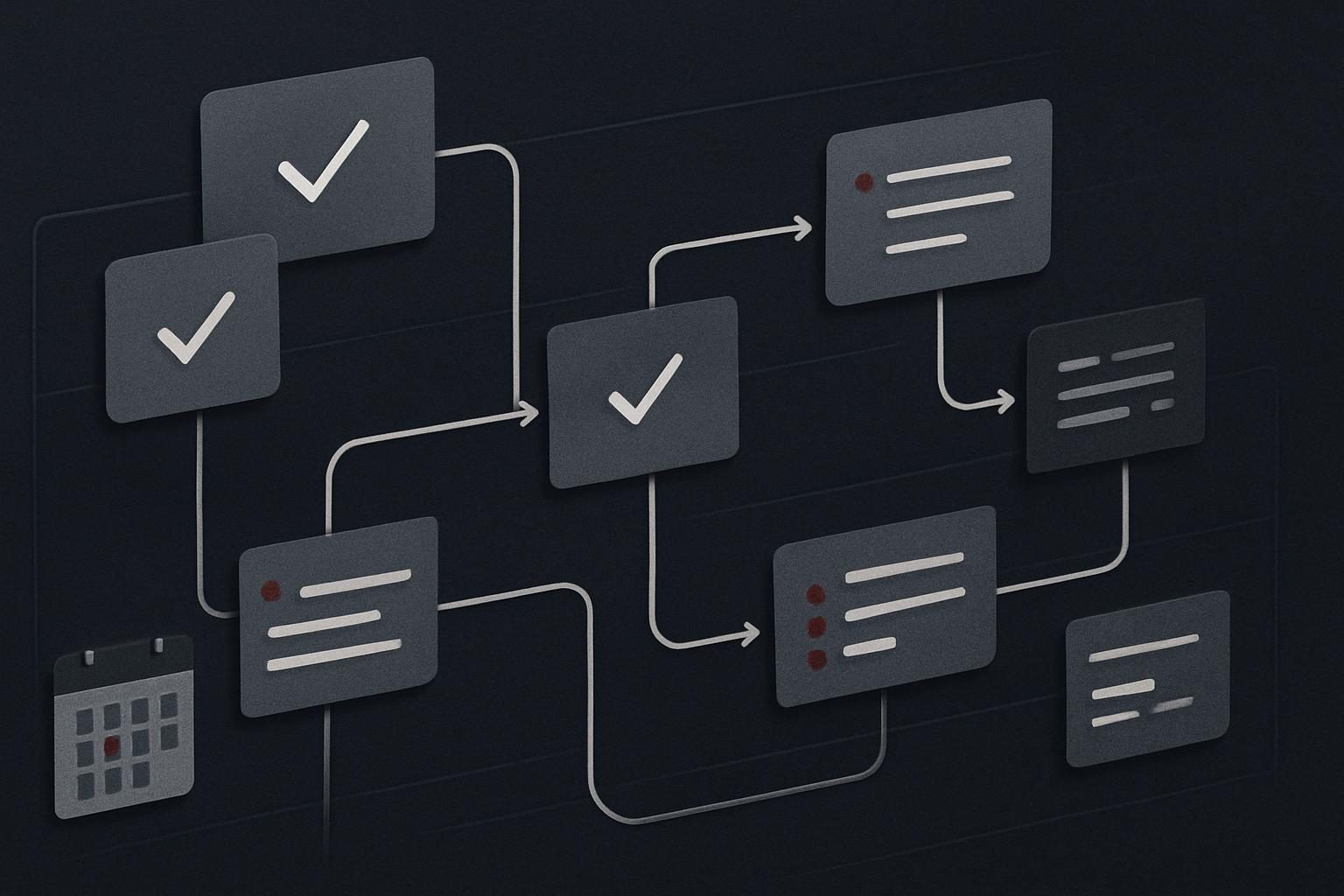
After an AI visibility audit, convert findings into a short operating plan: freeze the starting record, select a constrained first batch, assign one accountable owner per change, record dependencies, verify the live release and retest against pre-agreed pass or fail criteria. The aim is not to prove that every platform changed its behaviour. It is to establish whether the implementation was completed correctly and whether the selected observation set changed enough to justify the next batch.
Start by turning findings into decisions
An audit should already have established an order of work. The next job is operational: translate each material finding into a decision that a developer, content owner, SEO lead or communications lead can actually carry out.
Use the priority logic from a practical AI visibility audit priority framework as the input, then reduce the first 30 days to a small number of related changes. A finding is not ready for implementation until it has a scope, owner, dependency, release method and retest method.
Do not treat every item as a website ticket. Some fixes belong with development, others with content, legal review, brand governance or external communications. One owner should be accountable for closure even where several people contribute.
Freeze the record before editing anything
Save the audit finding, affected URLs, source files, current page capture, structured-data output and release date in one place. Keep the original wording of the issue. Once a page has been rewritten twice, teams tend to remember the intended fix rather than what was actually live.
Also retain the starting observation set. A documented AI visibility baseline before website changes gives the retest a fixed comparison point rather than a collection of remembered answers and screenshots.
Build a 30-day tracker that can survive a status meeting
The tracker does not need elaborate scoring. It needs enough detail to prevent work being lost between the audit, the backlog and the production release.
| Tracker field | What to record | Example |
|---|---|---|
| Change ID and scope | One bounded implementation, including affected URLs or templates | TECH-04: expose service-page body copy in initial HTML |
| Accountable owner | One person responsible for completion and evidence | Development lead |
| Contributors | Teams needed to complete or approve the work | SEO lead, content editor, QA |
| Dependency | What must happen first, including approval or release constraints | CMS template deployment before page edits |
| Batch | The controlled release group | Batch 1: access and core service-page updates |
| Live check | The production evidence that confirms the stated work is live | Plain HTML fetch, rendered-page check and sitemap review |
| Retest rule | The observation and threshold used to make a decision | Repeat fixed prompt set after collection window and compare recorded outputs |
| Status | Not started, blocked, in QA, live, passed, failed or deferred | Blocked pending legal approval |
Keep impact and effort as short labels, not a false-precision formula. High, medium and low are enough if the reasoning is recorded. A high-impact item with a two-week legal dependency may still sit behind a medium-impact technical fix that can be released safely this week.
Group work by release constraint, not by audit chapter
Audit reports are usually organised by inspection area. Releases should be organised by what can be implemented and checked together. That distinction matters.
For example, an audit may identify crawler access issues, inconsistent service wording, weak service pages and missing external corroboration. A useful first batch might contain only two related changes: make priority service-page content available in the initial server response, then publish approved page revisions against that stable template.
That batch has a clean dependency chain. The content team should not spend days revising pages before the development team confirms that the revised copy will be present in the HTML delivered to a non-JavaScript fetch. A page can look complete in a browser while its initial response contains little beyond a loading shell.
Use three batch types
- Foundation batch: production access, rendering, canonical handling, sitemap inclusion and structured-data deployment checks.
- Page batch: bounded revisions to the pages that support the highest-value services or commercial questions.
- Corroboration batch: approved changes to external profiles, evidence sources or outreach materials that require another organisation’s participation.
Do not put all three in one release window. The first two are usually more controllable. External authority work can continue in parallel, but it has different lead times and should not delay a technical or editorial release that is ready.
Make ownership explicit before work begins
Shared ownership is often code for nobody checking the final outcome. Assign an accountable owner, a delivery owner and an approver where needed.
For a service-page batch, the content lead may deliver copy, the developer may publish the component changes and the SEO lead may verify metadata, internal links, schema relationships and indexation signals. The marketing lead can approve the commercial wording. One named person should still own the tracker row through to its retest decision.
Set a release check that happens on production, not staging. Confirm the correct URL resolves, the intended copy is in the delivered HTML where required, structured data is valid JSON-LD, canonical tags point where expected, and the URL remains present in the XML sitemap if it should be. Record the deployment timestamp and any cache purge. These are boring details, but they stop a retest being run against an old edge-cached page.
Retest the release, then make a decision
A retest has two separate jobs. First, verify that the agreed implementation is live. Second, collect enough post-release observations to decide whether to continue, adjust or stop. Do not collapse them into one vague statement that the change was tested.
- Close the live-release check with production evidence attached to the tracker.
- Wait for the agreed collection window, allowing for crawling, indexing and platform variation where relevant.
- Run the same recorded prompt portfolio and scoring rules used in the baseline.
- Compare the output with the frozen record, including platform, location, date and prompt wording.
- Mark the batch passed, inconclusive or failed against its stated rule.
A pass does not mean an independent AI platform now owes the business a citation or recommendation. It means the implementation met its release criteria and produced enough consistent evidence to continue the chosen direction. An inconclusive result means the team should avoid adding several unrelated fixes before deciding what to observe next.
Where outputs move unexpectedly, use a documented method for interpreting changing AI visibility results before declaring the release successful or unsuccessful. A single favourable response is not a release verdict.
Set pass and fail rules before the batch is live
Each batch needs a practical decision rule. For a technical release, pass may mean the required content, links and structured data are visible in production checks and no deployment regression is found. For a page batch, pass may require that the correct claims, service details and supporting evidence are live on every planned URL.
For the AI visibility retest, define what would count as enough evidence in advance. This might be repeated confirmation that revised pages are accessible and represented consistently across the fixed observation set. If the results are mixed, mark the batch inconclusive and preserve the record. Do not rewrite the scoring rule after seeing the answer.
Questions teams ask after an AI visibility audit
Who should own fixes after an AI visibility audit?
Assign ownership by implementation type, then nominate one accountable person for each tracker row. Development should own code and template deployment, content teams should own approved copy, and marketing or communications should own external source work. The accountable owner closes dependencies, collects production evidence and ensures the retest decision is recorded.
How many changes should we make before retesting?
Make the smallest related batch that can reasonably be released and checked together. Technical template work and the page changes that depend on it can sit in one batch. Avoid mixing crawler access changes, broad content rewrites and external authority activity if you want a useful record of what changed.
How long should we collect evidence after a release?
Set the window before deployment and adjust it to the type of work. Production checks can happen immediately. Crawl, indexing and AI visibility observations need a longer collection period and may vary by platform. The important part is consistency: use the same conditions, document the dates and avoid treating one isolated result as conclusive.